AI, Shipping Faster, and the Future of Distribution
Steve Mordue

 Spotify
 Apple Podcasts
 YouTube
 RSS Feed
 Amazon Music
 PocketCasts
 iHeartRadio
 Podcast Addict
 AI, Shipping Faster, and the Future of Distribution
Full Show Notes
https://www.theintelligenceagepodcast.com/841
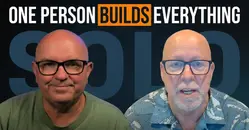
Mark Smith talks with Steve Mordue about how AI has changed the pace of building, shipping, and distributing software over the last six months. Steve shares what it looks like to move from being a seller and product visionary to building almost everything himself, why the last 5 percent is often the hardest part, and why distribution is now as important as the product itself.
They also get into Microsoft’s role in AI, the rise of open weight models, model routing, enterprise trust, and how sovereign data concerns are reshaping what companies can safely adopt.
Key topics
- In this episode, Steve Mordue describes the last six months in AI as a mix of speed, exhaustion, and concentration
- He says work is moving so fast that things built just months ago already feel outdated
- AI has not reduced the workload so much as multiplied the number of possible ideas
- Steve reflects on building Rapid Start CRM and what that taught him about scale
- He says the platform reached about 170,000 users
- Looking back, he feels it should have reached far more if marketing had been stronger
- We discuss the “last 5 percent” problem
- Mark raises the challenge of turning a near-finished product into something shippable
- Steve admits he is deeply affected by perfectionism and often obsesses over details others do not care about
- Steve explains why he now launches before perfection
- He says he recently forced himself to ship an AI app at 95 percent complete
- His view is that waiting for 100 percent means never launching
- We talk about how AI has changed his role from seller to builder
- Steve says his core strength has always been selling
- He now uses AI to write code, prototype, and build without depending on a large dev team
- He says the old dependency on teams and contractors has largely disappeared
- Every future Rapid Start product, he says, will be built by him alone
- His main limitation is no longer engineering access, but time
- They explore the value of domain expertise in the AI era
- Steve argues that people with deep knowledge in a narrow business area are best positioned to apply AI well
- He believes AI works best when paired with years of real industry experience
- Distribution becomes the central strategic problem
- Mark and Steve discuss how social platforms, email, and newsletters are losing effectiveness
- Steve says LinkedIn followers are usually peers, not buyers, which limits direct revenue impact
- They compare Microsoft’s strengths and weaknesses in AI
- Steve acknowledges Microsoft’s global distribution, infrastructure, and governance strengths
If you want to get in touch with me, you can message me here on Linkedin.
Thanks for listening 🚀 - Mark Smith
00:25 - Introduction to AI Journey
01:12 - The Rapid Evolution of AI
04:43 - Navigating the Last Mile to Launch
07:18 - From Visionary to Builder
11:31 - The Power of AI in Development
14:29 - Changing Landscape of Distribution
18:33 - Leveraging Domain Knowledge in AI
19:22 - Microsoft's Position in the AI Space
25:55 - Navigating the Challenges of Large Corporations
27:26 - The Need for Agility in AI Development
28:51 - Governance and Data Security in AI
30:59 - The Competitive Landscape of AI Solutions
32:42 - The Future of AI Models and Their Accessibility
34:53 - The Impact of Geopolitics on AI Development
37:37 - The Role of Open Source in AI Innovation
39:16 - Model Routing and Cost Efficiency in AI
Mark Smith
The intelligence age is not coming. We're already living in it. I'm Mark Smith, and each week I speak with the people building, leading, and navigating a world being reshaped by artificial intelligence. We explore AI technology, the changing nature of work, and what it takes to build a meaningful career in the intelligence age. This is the intelligence age. Hey, I'm here with Steve Mordue my uh colleague and friend from Brazil, all across the world.
Introduction to AI Journey
Mark Smith
Steven Mordue
I'm in Brazil.
Mark Smith
Sorry. Yeah, not from Brazil. You live in Brazil. Exactly. He has this paradise compound plantation slice of the world that's Amazonian jungle kind of beauty. I have one of the mountain, yeah. Yeah, you live in a it's a it's a beautiful looking place. I can't wait to visit.
Steven Mordue
Yeah, yeah.
Mark Smith
But what I want to kick off with, Steve, is tell me about the last six months and what has been happening for you in the AI space. So just really since January, December, January this year.
The Rapid Evolution of AI
Steven Mordue
I would say speed, exhaustion, and concentration. You know, the the stuff is moving so fast. I was building stuff six months ago that I already feel like needs to be completely rebuilt. You know, the things are moving so fast. Exhaustion, just because, you know, I don't know who thought that AI was going to make the job easier. I mean, it has yeah, maybe if I didn't change the job, it would have made it easier. But because of AI, I've got so many more ideas that are now possible that weren't before that you know, the backlog has just gone you know exponential. So it's it's it's kind of exhausting. There's like no end. In a way, I kind of feel like you know, we're on a treadmill. And the fact that, you know, we built a Rep Start CRM in 2015, and that product has been around for what 11 almost 12 years now, with basically just minor maintenance over those years to keep it current. Yeah, we're not in that space anymore. Now it's it's three months old, throw it in the garbage, and build something completely different.
Mark Smith
So so just to give us some perspective, that platform that you built, how many users did you get up to on that platform?
Steven Mordue
170,000 thousand.
Mark Smith
Okay, so it's uh a substantial platform with a substantial number of users operating on it. My understanding fully built on Microsoft infrastructure at the time. Yep. Still is. So okay, so so so it and and that leads into you obviously know the SaaS industry.
Steven Mordue
Well, yeah, you could say that. I I I often have told myself, knowing what the application is and what it costs, there should have been a million users. So 170,000 sounds like success. I kind of look at that as boy, we really missed the mark significantly because I I felt like for what it is and what it was, and what we were up against in the way of competition should have been much more. But you know, I'm I'm more of a product person, idea guy, built builder, more so now than ever, and never been that great a marketer. So the fact that we even got to that many is kind of surprising. But you know, had I been a better marketer, you know, that would have been significantly more. But you know, my my marketing has main mainly been through social, and a lot of my social is maybe a little too candid for you know some of the population. So I I don't know. But uh yeah, I think I think that uh looking back, I'd consider that a modest success, not anywhere near where it could have been or should have been.
Mark Smith
So that raises for me a couple of of avenues because there we we live in a world now that it's possible to build anything at a phenomenal rate and get a product to a uh let's say 95% done state, and then there's always that little bit of polish on the end to finish it off. And how I'll start with that actually, how do you handle that last mile, if you like, where going from architecting a concept, getting it to production ready, but the law of 5% is getting it out the door. How are you handling that yourself and and stopping, you know? I I'll give you an example. I worked for um a guy um over 20 years ago, and he would build uh manufacture devices used in the medical industry. And he would, there were a couple of incumbents that, you know, had big factories and produced these out of Europe and the US inconsistently. He built everyone as a bespoke piece, and he never got to scale because the last build had new ideas and he kept applying the new ideas, and so he never got to economies of scale because everything became a bespoke build because his new ideas like he couldn't productionize that one yet. And the problem is you can't scale something that you're always you know, that button needs to change its color. I want to put a, you know, a bezel on that one, or I want to do a rounded corners, or I want to change the font type. How do you get though from that last 5% done to ship shipping?
Navigating the Last Mile to Launch
Mark Smith
Steven Mordue
I I've given up. I think that I suffer from that affliction uh deeply. I mean, I am a maybe I'm a little OCD, I don't know, but I obsess over details that nobody gives a shit about. Uh but you know, I obsess over them. So that's one one thing. I actually pushed myself recently to launch a new a new AI app that we have. And I even went out and said, we're launching this 95% complete, because if I it'll it if I wait till it gets to 100, I'll never launch the damn thing. So at some point you got to kind of pull the ripcord, let it go, and then just continue and update it. You know, and I think that's another challenge I've had, again, coming back to this idea that given the tools we have today, all sorts of ideas are possible. I'm in the middle of building one of the biggest apps that we have, very important, under a crush to get it out because you know, the market's moving. You know, you see a space, it may it may not be vacant very long before somebody else has jumped into it, and now you're chasing them. So there's there's there's pressure to get stuff out. But then I get some other idea just in the back of my mind, kind of gurgling around, kind of an offshoot of something I was working on. And I stop and I go start building that. And I'm I'm I'm you know, multiple windows open, so I'm still paying a little attention and kind of in nudging this along, but in the meantime, this other thing has stolen all my attention. And I'm over here building that whole thing, and it's simpler, so I get it built, launched out, and then I come back. So it it's uh it's a shiny object syndrome on steroids uh right now for sure. And I'm I'm absolutely, you know, ooh, squirrel, uh kind of a personality.
From Visionary to Builder
Mark Smith
So you're somebody that's often been visionary and seeing an opportunity in the market and building a solution, but you've not been the builder, right? You've you've often had resource engineering teams, etc., behind you, dev, you know, a massive squad of developers I've seen that you've had as part of your your larger or wider team in the past. What's changed as in this year? Do you still have that dependency on a massive developer base, or are you finding that you can go from vision to uh production a heck of a lot quicker in what you're doing nowadays?
Steven Mordue
You know, I think at my core, I'm a seller. I mean, that's what I've if I look at my career over all the years, the different things that I've been involved in. I've always been my own boss. I've never had a job anywhere. But since I never had a job, my primary job really was selling whatever the hell I was doing. And I became pretty proficient and pretty good at selling. So I've always had in every role I've ever had, selling was a key component, a key skill that that I developed over a long period of time, and I've got pretty good at it. With the the Rapid Start stuff originally back in 2015 was really my first move into products. You know, I was selling other people's products, you know, selling Salesforce for a decade and initially selling Microsoft products for a while. And it was in 2015 that I really was just seeing a, you know, seeing a problem that I thought I could solve and come up with something, and and I came up with some idea and kind of hacked out a few things. I mean, I was tech savvy, comfortable with the applications, messing around with them, certainly not a code code developer or anything close. But I I could hack together something, and I hacked together, really I at this point looking back, I would have called it a POC at best, uh, and took it to market because I'm a seller. You know, so seller wants to sell. And now we, you know, it it got some traction. So that kind of led me into the the space of more builder than seller. And over the years, you know, trying to learn a little bit about power platform, you know, fake it till you make it, copy paste code, whatever it took to try and you know advance the application. But to your point, whenever I wanted to do anything significant, I would have to reach out to either somebody on the team, because we still have continuously had an SI practice, reach out to somebody on a team, hope I could find somebody that wasn't working on a paying assignment to help do something, or you know, maybe contract it out uh to some folks that you and I both know that you know have worked with over the years to kind of do some pieces for me. And it was always frustrating, you know, because once you kind of move into that builder mentality, you start getting a very particular idea about something and what it should do, what it should look like, and then then here's this big hunk that you've you've identified in your mind, but you can't build it. So you you reach out to someone else and they're they're building it based on your description, sending something back to you that isn't really what you wanted. So you end up kind of compromising. You go back and forth a few times and finally say, okay, it's good enough, close enough. So the inability to actually code or build deeply was a huge frustration uh for me the whole time, ever since I became in the ISB space, completely dependent on other people. Very difficult to pull someone on the team off of a paying project to go, you know, fiddle around with my stuff. So, you know, once AI kind of hit the scene, you know, originally back even ChatGTP, being able to have it write even something like you know, some JavaScript that I could then copy and paste, you know, into a web resource in an application and get a result was was pretty amazing. So that's kind of where it started. But where that has gone from then to now is just you know, I don't need to tell anybody who's watching the show, I'm sure. Uh it has uh been uh a freeing. Uh you know, I I I don't use I don't out outsource anything anymore. I don't even use a team anymore. Every single thing that you're gonna see coming out under the Rapid Start brand for the foreseeable future will have been built by me. Just me, one person, no other people involved, which isn't, you know, previously there would have been a handful of other people involved in some bits and pieces of it, but and now the only thing I I I'm missing is enough hours in the day.
The Power of AI in Development
Steven Mordue
Mark Smith
Yeah. It was interesting. Sam Altman said, I think three years ago, that we are going to see in the near future the first billion-dollar company that is um run by a single individual. And and it seems that, you know, first movers like yourself have jumped into the space and started using your entire career of knowledge, body of knowledge, experience, etc., and then being able to apply that to very pointed outcomes and and being able to create and and build things. And I and I wonder if there's an operating model in the future where more and more individuals are going to take their collective career IP and be able to build solutions that have never been viable in the past because economies of scale could never be reached. And and and create tech software that can do a very fine niche. I'll use the word niche for the Americans, niche for the Kiwis, but allows allows that rapid building and and perhaps finding a market. But the flip side of that, and you touched on this earlier, and I'll put it under the heading of distribution. Um that would naturally include marketing, go to market, that type of thing. Distribution, I feel, in the last three, four years is massively changing. You know, both you and I have had large social media networks. I say large, well, not you know, not in the scale of influencer, but in the tech space, I think I've got 25,000 followers on LinkedIn. You've got a phenomenal number. I've had followers on X, over 10,000, and on Instagram. But I don't feel those platforms are working like they did in the past. And I think for one or two couple of reasons. One, the algorithms now are driven harder than ever to keep people on platform. So they don't want you hyperlinking off platform.
Steven Mordue
Sure.
Mark Smith
Right. So they they they specifically suppress that. And in many cases, unless you're non-paying, they'll even suppress any normal post. You know, particularly I'm noticing this on X nowadays. If you post something, and as I say, I've got, I think, 11,000 followers on X, the number of impressions it gets is just non-existent, right? Nobody's seeing that. That's that's not been presented to anybody. Definitely not being presented to my followers just because the absolute low visibility those metrics are showing, unless you're, you know, they're running a coin-operated platform. I'm wondering how does this change as that we m uh as we move forward? We've seen email being a massive marketing tool in the past. I'm kind of living under a framework now that I think within the next 12 months, I won't have email anymore in the format that we have it. Like I've noticed I've been able to diminish my email down so finely that the, you know, I've been able to get very good at filtering out spam and rubbish and everything and newsletters and stuff. And now it's just the pure core getting through. And then I can have AI do a lot of only surfacing to me through my personal agent that I use. What I need to respond to it, I can do a verbal response and it do it. No, I'm comfortable with it sending it out. I'm not giving legal advice or anything that's gonna, you know, shoot me in the foot or do me my business reputational damage. I'm comfortable with using it. And I'm I'm wondering if there's an abstraction layer away that, you know, newsletters are no longer effective, email is no longer effective channel, SMS, I don't know, has been effective for a long time. You've got WhatsApp, I suppose, and a few of these other, you know, Telegram messaging platforms, but they're not really marketing platforms. Yeah. How do you think about distribution? How do you get to the market and grow the volume? At the end of the day, like you can have a great product, but if you don't get eyeballs on it, how's it selling?
Changing Landscape of Distribution
Mark Smith
Steven Mordue
Yeah, I mean, I would say one of the challenges, yeah, I've got I've got I've got a decent number of followers on LinkedIn. None of them are customers. You know, I'm on I've I've spent a lot of time on LinkedIn over the years talking about Microsoft business applications, and the people that naturally follow you are your peers. Yeah. And your peers are not your customers. In most cases, you're in a unique situation with the 90-day mentoring challenge, and that all those peers, of which we share many followers, would be potential candidates for your assistance. But in my case, you know, my my the buyer of our stuff is typically the small and mid-size business, not the service provider or IT person. So I don't expect to get you know much activity from that. You know, coming back to your the first part of that question about people that have got domain knowledge, I think we're building things not because I had a brain fart about something, I don't know anything I'm talking about, but thought it'd be a cool idea, and I'm just gonna whip up something. We're building things that I know a lot about because I've spent a long time in a space. Now here comes AI, which is completely new, and trying to figure out how to match that capability into a space that I understand very well is the focus. You know, there's tons of people every day you see on Axe that have launched some app, some kid or some some goofball who doesn't know anything about anything. They have no experience in any kind of business at all. They came up with some idea in a dream, they're building it and hoping that somebody buys it, and or they're or worse, they're actually trying to go into some vertical that they have no understanding of at all building something. So I do agree that if you've got a lot of experience, a lot of knowledge about a particular thing, you know, and the narrower the better. In my case, right now, I'd have to say it's small business, you know, business solutions. Primarily Microsoft focused. I just the every one of those further narrowing is is helpful as long as once you've narrowed it's still big enough. And then if you got a good understanding of that, to be able to take something new like AI and translate it into that space to have a due value, uh I'm gonna do a better job than that than you know the best whiz out there using you know vibe coding who doesn't understand that niche. So I definitely agree. If you got a lot of experience in F and O and you understand F and O, you know, like nobody's business, uh business central hub spot. Pick pick one. If you keep knowledge and understanding of that particular thing at a to a higher level than the average bear, that there's a spot where you should be looking at AI and thinking, okay, how can I apply this to solve the problems that I uniquely understand uh that the average Joe doesn't and the customer doesn't, but the customer will value. So I think that's a I think that's good advice uh when you talk about people that know what they're doing, maybe making that jump.
Leveraging Domain Knowledge in AI
Steven Mordue
Mark Smith
You and I, our backgrounds are both heavily in Microsoft. And I've you know, one of my pivots for this podcast or my eight and a half years of podcasting that I then took a three-month break as I rebranded and changed my direction is that three years ago, Microsoft, I think, had I saw a chart with a something like 64% market share in the AI space because of their contract with OpenAI, the infrastructure they already had with Azure and and particularly machine learning and cognitive AI-related infrastructure that they had globally. And and their massive foot or customer, you know, if if you look at the the epitome of distribution, Microsoft is probably the gold standard globally when when it comes to that. And then in the last three years, even though yes, their recent shareholding report shows they're the pretty much one of only two companies that are out of the big global players that are, I think, still cash positive, as in as in their not net, as in going back, where you've got Google and and Meta and all these that they're spending more than they're making at the moment.
Microsoft's Position in the AI Space
Mark Smith
Steven Mordue
Very nice report.
Mark Smith
Yeah, shows that that they're still up there. The flip side of that, through my internal exposure to Microsoft through work I've done with them and in in recent times, and knowing so many people that have been displaced with their reorgs and the co-pilot injected into every single product, um, I think they have lost, but I don't think it's very obvious that that position of three years ago as AI leaders is gone. And I think my my opinion, part of the problem was Microsoft has always been a fast follower and really good and ultimately owning a market. And if I look across my 30-year IT career, Novell Netware was the network operating system for business. Boom, Microsoft replaced it. You look at a PlayStation, Word star, yeah, PlayStation, gaming, like every sector that they went into. They weren't necessarily market, but when they took a sector, they owned it. And in some cases, I suppose they got out early too when they knew they couldn't, like Zune, the MB3 player that they uh had for five minutes in and mobile, yeah, no care and stuff. Microsoft, in my mind, has never been a the market leader of a category, a product category that they could take. And I've my observation was of so many of their staff, they didn't know how to lead. They know how to battle cards and and compete in a space, but The uncome uh you know, the falling apart was they didn't know how to lead a space and outside of marketing, just pushing a whole bunch of absolute vaporware, demo wear into the market and set a customer expectation that I'm getting this, and then when the implementation happened for the customer, it was like no, just no parity whatsoever. That's my observation. What's your observation without you know totally shitting on them? In in the last three years.
Steven Mordue
History shows that you can't ever count Microsoft out. Absolutely. They they they will, if they're properly motivated and pointing in the right direction, they will end up moving into a space and dominating it. They've shown that history over and over and over again. Whether people like it or hate it, whatever, they've they've shown that history. The unique thing about AI, which I mentioned a long time ago, is that they were in the unique position because Nadella was sharp enough to see something early enough and lock up Open AI and have for in a river circumstance for Microsoft to be the first. They were like the first one in the space.
Mark Smith
Yeah. And that lockup wasn't when ChatGPT came out. It happened actually about two years earlier. Exactly. Because us on the power platform were already exposed to GBT earlier as part of the what was the what was the low-code kind of language that they added in? Uh PowerFX. Power FX really started introduced back then GPT before it was commercialized.
Steven Mordue
He had the foresight when he saw that glimmer back when to think, you know what? Whether it was defensive, that I can't let someone else take this, or just brilliant, hey, we have an opportunity to take advantage. Either way, he locked that thing up either to grow or to prevent someone from taking it, whatever the motivation, they were in that unique position of being first to market or first able to come to market. And that is not a common position for Microsoft. Historically, when you look back, they they're never first. They always come into a space that's been established by someone else, do it better, spend more money, and take it. So I think it was I think that was part of the challenge is they didn't know how to act, you know, from that position. So they're they're and you know, Microsoft is a hundred thousand plus engineers and salespeople. You know, so you got engineers and salespeople is primarily what makes up the up the company. I was listening to a podcast recently, just the 37 Signals guy. Mm-hmm.
Mark Smith
Yeah.
Steven Mordue
Talking about, you know, Microsoft and any of these big companies, you know, when you have that many engineers, you're gonna engineer. You know, that's just what they do. They engineer. And if you got a problem that that would require you know two engineers to solve, they're gonna put a hundred on it and make that thing you know a monster. And they've historically done that as well. And that's exactly what I think they did with the with the AI in the urgent race to win or to maintain the lead that they that that it was perceived that they had, uh, you know, copilot. Great, great name, lovely brand, sounds good. Um, slap it on everything as fast as you can. It doesn't have to be great, doesn't have to be good. Just get just check that box that every single thing we have is AI enabled, and we'll come back later and do another pass. I brought that up to Charles on my last call with him, uh, which he didn't talk to me anymore, but on my last
Navigating the Challenges of Large Corporations
Steven Mordue
call with him, I brought that up, and he he he he you can see he took a little umbrage to my saying he just slapped co-pilots on everything with the idea of coming back, but he had a difficult time disagreeing because it's kind of obvious to everybody that sees. In the meantime, I've talked about just myself in the last several months where we're looking at stuff that I built a few months ago already need to be replaced. Well, I'm I'm nimble. I can do that. I can decide, you know what, I'm gonna just but when you're a a ship the size of Microsoft and you start heading down a direction, good, bad, or otherwise, it's very difficult to steer that thing away from that direction on a dime. And so now they're in their I don't know what version of rethink, redesign, always behind. You know, they're always moving too slow, the the you know, they're they're too slow a ship, too many engineers stacked on in a huge pile in there to get to move quickly, and AI is moving way faster than Microsoft can keep up. So by the time we were doing the co-pilot studio in a day training for a few months. And uh, you know, this has been I don't know, year ago, something like that. And from week to week, the content they provided didn't keep up with the app that they were producing, which was already behind where the market was. So it they it was just so so stark to me being right there, seeing where they're at with both what they're presenting,
The Need for Agility in AI Development
Steven Mordue
what they're offering, and where the market is, that they they just can't keep up at all. They're too they're they're they're just they're not one of those nimble startups. You know, they're a great big behemoth. But that said, what they need, actually, and there's been talk about you know from the Frontier Labs and other folks about maybe maybe they just need to slow this down a little bit because of AGI or cyber risk, whatever other risks that were moving too fast and all this stuff, maybe we need to slow me down. If I'm Microsoft, I've said please, please slow down. Please slow down so we can we can catch up. Now we'll see. They had uh good earnings uh report just talked about recently. I credit that more in my mind to the sales team than the products uh that they produce. But then they do have the distribution, so it's really just a matter of now distribution, right? They've now distribution globally and they can sell a good story. And I tell you what, the other thing I will give them credit where credit's due, I think they have the most solid governance story for AI than any provider.
Mark Smith
Yep. When I look at you know what you get with Bedrock and and AWS and what you get with Anthropic Directly or OpenAI, etc. And I think even Satchio wrote a big paper on this recently, is that you not only pay for your token and so you're you're paying for it there, but you're paying for it because you're giving your data to these organizations.
Governance and Data Security in AI
Mark Smith
Steven Mordue
That's that that's his that's their moat. He has to he has to lean in on that moat because like a lot of people were like. Yeah.
Mark Smith
You know, we when we right back in the days, what our big thing was tenant isolation, there was no risk that you're in the same database table as your competitor, and there was never going to be any leakage or anything like that. They have nailed that infrastructure piece, I think, years ago. They've nailed the identity piece years ago. They've got it rock solid. Now, if they can execute with the market perception around the quality of outputs from the AI, like, and I'm particularly in this case, I'll I'll cave this with Copilot, I think they will do well. A lot of co-pilot users have no idea that under the hood is Opus V or uh GPT what is it, 5.6. Sorry, yeah, at the moment. They have no no no idea that that's there or that's how these are being, but there's the the the the governance protection like never before, right? If you're using anthropic via that scaffold, you're not training anthropic with it because Microsoft Anthropic have a legal agreement about it.
Steven Mordue
I wonder who did that because you know when you think about the markets that they went in long time ago, Lotus 1, 2, 3, they pop up eventually smash it, Lotus 1, 2, 3 is gone. Not just smaller gone. Word star, word perfect, gone, gone, gone. It just went in. But then in more recent years, you know, we've seen from our position a pretty heavy battle against Salesforce. And Salesforce is not gone. Microsoft did not eliminate sales. In fact, they probably made barely a dent in Salesforce. Uh on the ERP side up against SAP, but barely a dent in that now, they've genuinely strongly SAP. The the markets were big enough that even to the degree they got, it's still a good business. But it's not like before when they would just dedicate time,
The Competitive Landscape of AI Solutions
Steven Mordue
middle energy, and resources and just go take over. Maybe sales uh uh, you know, Google versus Bing, you know, another one. They're they're they're kind of an also ran in a lot of those categories, but even as an also ran as good revenue businesses. I think the lucky thing they have for them in the AI space at the moment is nobody else has figured it out yet either. There isn't a runaway business or you know there other than the the frontier models, which I think they made a big mistake by not becoming one when they had the opportunity, when it was still disruptive. I mean, he he saw the potential when he you know invested and locked them up, but the potential should have been to just do it. But yeah, but nobody's not yet. There's no sales force of a solutions. There's you know the the language models so that they still have a chance. I mean they've they've tripped several times in this journey, but everybody else has tripped too. And part of it is because it moves so fast that it's hard to even walk without tripping. But there's still an opportunity if they can get if they and I say get it right. I mean, get it right is transitive, right? I mean, you get it right today, and then you know, 90 days from now, that'll be the old way of doing it, you know. I mean, you look at all the you look at all the patches and bridges. Uh, you know, it was it wasn't maybe a year ago I was talking to you and you were saying, man, uh prompt uh look at this prompt I wrote for for for AI, and it was like you know, two-page long prompt that you'd put together. And today you wouldn't do any of that. I mean, it won't the less the better.
Mark Smith
So these were like I just want to be talking, having a conversation, you know?
The Future of AI Models and Their Accessibility
Mark Smith
Steven Mordue
Yeah. But but these were like the original ideas because of where the models were at the time. This is what they needed. But now as they have moved along, you know, things like loops, co-work, uh, the whole bunch of stuff that in my mind is just not needed. And the model doesn't need those crutches anymore. So that'll be the next whatever the crutches we're talking about today, everybody's talking about, oh, here's the latest way to get the most out of the model. Yeah, that's that's that's gonna last a couple of months and the model will just solve for that problem, just like they have all those others.
Mark Smith
And I and I think we'll get to that layer of intelligence that will be good enough for any use case. Oh, yes. And then and then that turns back to, you know, I mean, two months ago, you would have said that there are only two hyper sorry, there are two frontier labs that were in market. It was a duopoly between open AI and Anthropic. And yet in two months, that world totally got up-ended with, you know, what came out with Kimmy, K3, what's been released even in the last 48 hours again from other Chinese open models, even open models coming out of the US, with is it Mira, the CTO that was at OpenAI originally, but this whole idea of of yeah, of AI at the edge, you want it to have your own data. And you don't want that data to be given up to the provider. And so I see as the ability to compute on small on cheaper and cheaper silicon and memory and the ability to keep my data set in-house or on a cloud infrastructure, but not a shared cloud infrastructure. And sorry, no, it's a it's my infrastructure and in a hyperscaler. I think that totally changes the picture because now everybody's AI, and when I'm talking about at a company level, becomes hyper-accurate or hyper-contextual aware of that business without giving the data set over to a Frontier lab to make them more experts and uh ability to train their models.
The Impact of Geopolitics on AI Development
Steven Mordue
Well, certainly we've heard Alex Carp in particular and others on the bandwagon that, hey, you know, Frontier models uh partnered with uh Figma, for example, underscored Figma, and then launched their own Figmers. I did business. And and and they can do the same thing to your business because they they get your alpha, as he calls it, and they can do it. And then I was seeing another credible podcast uh recently about you know Chinese models, you know. I mean, yeah, you put it on your you put it on your infrastructure, it's completely safe, right? No idea. I mean, you don't know. I mean, yeah, you can see weights, you can see, but you don't know what's in the model that some phrase you might say could trigger the model to to do something and send it. So there's like there's risk on all sides. And I think that's a challenge. But one thing that I think is happening is at least in the US, we're probably getting close to as good a model as they're gonna allow us to have. I think the the fable lockdown was a a straw that kind of broke, uh, where the government said, whoa, whoa, whoa, stop here. Now completely, in my opinion, Dario did that to himself, you know, but how he's talking about it. But it happened.
Mark Smith
There was an own goal there. There was an own goal, right?
Steven Mordue
The first time a government steps in and takes an action is the beginning of the government stepping in and taking actions. And I think that that got very close to the the ceiling. Maybe now with some convincing, the government will let it go a little farther. But the ceiling isn't far from where that was. And everybody else, I mean, great for the open source models, because now they have a chance to finally potentially catch up before you know they all they're all gonna converge at that same spot.
Mark Smith
Yeah.
Steven Mordue
You know, and you talk about Kimmy. I think Kimmy's a a great model, but I mean if you're gonna run that locally, you need a fifteen thousand dollar computer to do it. I mean, it isn't it isn't gonna run on your Mac Mini. You know, this is a three trillion, a three trillion parameter model, so that's not realistic either. So you're gonna have to host that, pay hosting fees, and and and it's not on everyday tasks on par, a lot on the coding on par, but on the real frontier level stuff, which I know a lot of people don't care about, but you know, the the the curing diseases and this sort of stuff, it it it's not even in the same league as the frontier models. Now, that doesn't mean it won't get there. But you know, you hear you you go on X, you see all these Kimmy's the best. Well, yeah, you're just some little schmuck in a in a closet building little crappy apps for yourself, and it's perfectly fine for what you're doing. But when you get into enterprise, I I also think that enterprise is going to be nervous about you know Chinese models because it's Chinese. Whether that's paranoia, whether it's justified, whether it doesn't matter. You know, there's just going to be this this concern of I don't know what I don't know, yeah, but I know China's probably not my friend. You know, that's all they know.
The Role of Open Source in AI Innovation
Steven Mordue
Mark Smith
But but but that's that's the thing, right? It's often a politically motivated, not a factual motivated scenario that's been dealt with. You know, people leaning into fear rather than fact. You mean like everything. Yeah, exactly, exactly, exactly.
Steven Mordue
And then you gotta carp and and other folks jumping on his side and say, hey, the clothes models are just as dangerous. So I mean, if I'm an enterprise buyer right now, concerned about what the hell to do.
Mark Smith
There's not a chance I'd want anything on Palantir's infrastructure at all. So, I mean, for Alex Carp saying that, like you know, you've got to go, okay, what's his motivation? And of course, he wants to sell more of what what he has.
Steven Mordue
The post you were talking about of Sachin Adela's, you know? I mean, that was yeah, well, I don't disagree. It was it was pretty self-serving. I mean, basically he's saying, hey, don't trust anybody but us because we got all the governance. So uh, you know, it's all kind of self-serving.
Mark Smith
I think where the open weight's gonna have an effect is in every business country state outside of America. Because when the US government put the handbrake on Fable, it sent a clear message to every other sovereign nation. You have no control. You have no control.
Model Routing and Cost Efficiency in AI
Steven Mordue
Yeah, but a single EU will shut it down before the US does.
Mark Smith
The the EU What I think will happen, what I think will happen is that China are gonna pull ahead in open source. They're gonna pro just like they provide the mound the manufacturing of the world, they're actually gonna provide the AI of the world. And it's because of the US blocking what will happen. You take Australia, for example. In Australia, you're not allowed to, if you're a financial institution, run AI that is not on soil in country. Yeah, so they're not using it. Right, they can't use it. Nobody can make that guarantee that that that that it's not going to be run on a server out of SAMFRAN or something like that. Sure. So now they're going, hmm, okay, we need to build our own AI infrastructure in country. We're gonna put our own AI data centers in. That that doesn't mean it's anthropic or open AI data centers. This is their own AI data centers. Well, they're gonna need to run models on those. They're not buying it off open AI, they're not buying those models as they, you know, they control that. So what's their viable option?
Steven Mordue
You know, it's it's kind of funny when you think about the when the the the labs, the frontier labs launched out there, uh, Facebook was kind of dragging their feet a little bit, Meta. And then he jumped in a little late. And he had this idea that, yeah, we're just gonna go open source because these guys have already got it, and we'll we'll play this other angle. But then he kind of stopped paying much attention. Well, that opportunity's back. I mean, the opportunity that what's missing right now, at least in the biggest market in the world of the U.S., is uh US built-based open source. The only fear or concern anybody has about Kimmy is that it's Chinese. Not that the model isn't good, awesome, cheaper, all that is wonderful. It's just Chinese. So there is a huge, and I'm sure, no doubt, after what's happened, there's all sorts of discussion, investment, all sorts of things happening behind the scenes. And we're gonna see some major investments, some big US and Europe, Europe-based open source models come out of this because they're gonna see that you know Alex Carp and people like him are gonna continue scaring customers. And Chinese isn't an option for a lot of those customers. So that's a huge and that's the biggest space there is, because the only ones that give a shit are businesses, right? Joe Blow in his basement building apps doesn't care what he uses, he's just using the cheapest thing he can find. But when you go into enterprise, you know, they they want to reduce costs, uh, but they don't want they don't want Chinese. So that that to me is a screaming opportunity that we're gonna see some big launches of open AI or open weight US-based models. And it's funny that Zuckerberg was actually already there, but you know, just didn't feel like he could catch the closed source, and I think uh just backed off on the investment. I think another thing, and you and I have talked about this kind of wrap on this, if you want, is the uh model routing. I mean, now with so many options of models from the most expensive closed source to the cheapest out there, um and smart model routing is going to be uh extremely important. And yeah, there it's being done out there by some folks. Microsoft started an effort with the Foundry model router that does exactly this. You know, it it costs a couple of tokens because right now what most people are doing is I've got this important agent, I'm gonna assign it an important expensive model. I got this unimportant agent, I'm gonna assign it an unimportant model. Which is the wrong way to do it. What you really want to do is I got this important task. Whatever agent's doing it, I don't care. I got an important task, and I want an important model on that, and I got this simple task, I want a simple model on that. This is where model routing should be a huge player. You it spends a couple of tokens to look down that task and say, okay, can this task be performed by a low-cost model satisfactorily? Yes, route it that. I don't care who the agent it is who asked for it. Yeah, I'm gonna route it to that model.
Mark Smith
Exactly, exactly.
Steven Mordue
Model router, which Microsoft, at least the latest version I've seen, is almost a year old. They they they came out with that, and I don't think enough pe I don't think the costs were a big enough factor at the time that they did for people to care, but they are now.
Mark Smith
Yeah.
Steven Mordue
When you're looking at massive differences in intelligence cost, suddenly routing is massively important, but they still only have a handful of models available in that. It's still only available in a couple of regions. If if Microsoft really wants to do something they should spend less time on Copilot and more time on that routing.
Mark Smith
I mean, I understand that's more of an infrastructure play for them, but that would be it's something that we should be seeing monthly meta-minimum releases on improvements because there's a lot to tweak and get right in that there's always new models coming in. There's always optimizations that could be made and and learnt from. And, you know, you just need to look at open router, and they've they've built a nice little business on this, but it's out on it's you know, once again, probably not going to be used by an enterprise. Yeah, it's out on the city. Microsoft could create that enterprise version of it.
Steven Mordue
Exactly what they need. Exactly. I mean, just go copy that, license it. I don't care what you do, but yeah, that that should be a core. I mean, in my mind, that's that should be the highest priority thing they do right now because that's where the cost hits the bottom line. That's where as an enterprise I can go in and pre-select 10 models that I'm comfortable with, you know, at different and then just let the router figure out which one's best for the task. I'm gonna I'm gonna save a bunch of money, and you've you've enabled that for me. Uh that's where I'm going. I mean, yeah. I can't bring in open router, some I don't even know what it is. I can't bring that into the enterprise. So Microsoft needs to solve that problem, or somebody else will.
Mark Smith
Yeah. Steve, it's been great talking to you. I uh we will put your bio, etc., in the show notes and uh links to what you do and how people can get in touch with you. Thanks for coming on the show.
Steven Mordue
Why, man, always a pleasure.
Mark Smith
You've been listening to the Intelligence Age. I'm Mike Smith. The Intelligence Age is already here. The question is, what we choose to do with it.