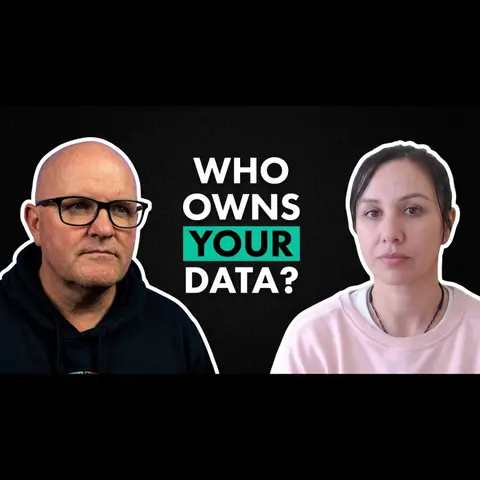
Data sovereignty, governance debt, and AI for Māori startups Full Show Notes https://www.theintelligenceagepodcast.com/842 Amber Taylor joins Mark Smth to unpack Māori data sovereignty at the point of AI system design, with a sharp focus on what startups need to think about before they build. The conversation gets practical fast, moving from governance debt and investor pressure to the risks of using third party AI platforms with sensitive indigenous knowledge. We discuss why governanc...

 Spotify
 Apple Podcasts
 YouTube
 RSS Feed
 Amazon Music
 PocketCasts
 iHeartRadio
 Podcast Addict
 Data sovereignty, governance debt, and AI for Māori startups
Full Show Notes
https://www.theintelligenceagepodcast.com/842
Amber Taylor joins Mark Smth to unpack Māori data sovereignty at the point of AI system design, with a sharp focus on what startups need to think about before they build. The conversation gets practical fast, moving from governance debt and investor pressure to the risks of using third party AI platforms with sensitive indigenous knowledge.
We discuss why governance has to be designed in upfront, how sovereignty changes when data touches external AI systems, and what an indigenous layer for AI could look like in practice.
Key topics
- Amber shares why the paper started with a startup lens, not just a sovereignty lens, because small teams do not have the same governance or architecture resources as large organisations.
- She introduces the idea of governance debt, arguing that AI governance added after a system is built creates the same kind of accumulated risk as technical debt.
- Amber explains why many AI governance frameworks miss the realities of founders and small teams who need workable, early-stage decision support.
- The discussion covers the limits of simply keeping data on Aotearoa soil if it still passes through external AI systems that the organisation does not control.
- Amber and Mark dig into the misconception that platforms are not training on user data, and why ticking a consent box is not the same as governance.
- They explore how investors can pressure startups to monetise data in ways that conflict with the original agreements made with communities and data holders.
- Amber shares how her own work with indigenous storytelling set clear protocols upfront, including ownership, attribution, and what happens if a company is sold.
- The conversation uses 23andMe as a cautionary example of what happens when DNA data becomes an acquired asset under new ownership.
- Amber outlines a future direction for an indigenous AI layer that could sit on top of any model, govern knowledge use, improve accuracy, and return reciprocity to source communities.
- The episode closes on the idea that New Zealand often builds first and regulation catches up later, creating opportunity for smaller AI companies to move quickly and responsibly.
If you want to get in touch with me, you can message me here on Linkedin.
Thanks for listening 🚀 - Mark Smith
00:27 - Meet Amber Taylor and the Māori data sovereignty conversation
01:21 - Food, family, fun, and the role of place in Amber's life
02:19 - Growing food, indoor plants, and balancing tech with land
04:10 - Why this paper focused on AI governance for startups
08:23 - Why Amber coined the term governance debt
10:03 - Building governance at the system design stage
12:07 - Data residency, disaster recovery, and sovereignty in New Zealand
15:07 - Why keeping data in-country is not enough if the AI platform is external
17:06 - How AI vendors can repurpose business behavior patterns
19:01 - Could Māori-led data centre initiatives create real redundancy?
20:40 - An indigenous layer that governs knowledge across any AI model
22:30 - Why lineage and attribution matter as much as language
23:14 - The Aura Ring, Palantir, and why data ownership changes trust
24:04 - 23andMe, receivership, and what happens when data gets sold
29:35 - Investor incentives versus values, contracts, and data rights
33:08 - What startups can adopt to get most of the governance thinking right
34:12 - The workshop example that changed how people viewed AI risk
37:36 - Why New Zealand builds first and regulation catches up later
39:56 - What excites Amber about the next 6 to 12 months
The intelligence age is not coming. We're already living in it. I'm Mark Smith, and each week I speak with the people building, leading, and navigating a world being reshaped by artificial intelligence. We explore AI technology, the changing nature of work, and what it takes to build a meaningful career in the intelligence age. This is the Intelligence Age. Welcome back. I'm here today with Amber Taylor. Amber, welcome to the show. How's your day going?
Meet Amber Taylor and the Māori data sovereignty conversation
Mark SmithAmber Taylor
Kyoto Mark, my day is going very well. Happy to report that it's nice and sunny here in Tamaki Makoto. Um, definitely not flowing like in Wellington.
Mark SmithYeah, it's uh it's a cold snap today, though. It's I think the coldest, which is five degrees is the coldest it's ever been at my property um in the six years we've lived here. Um and I can feel it. It feels like three degrees, so it's it's cold.
Amber TaylorWe've hit three here. And on our property, it's hit yeah, three, two degrees.
Mark SmithSo yeah, it gets cold. Crazy, crazy. I always like to start with food, family, and fun. What do they mean to you? Where's your sense of place and belonging? And uh lets people get to know who you are before we get into what we're gonna talk about today on data sovereignty and AI.
Food, family, fun, and the role of place in Amber's life
Amber TaylorSo food, family, fun. Okay, family always comes first for me. Um, first and foremost is my fano. So I have a wonderful partner of 28 years now and two cadults. Um, cadults because one's 26 and the other is 18. And I also have two more core. Um, one is going on six very shortly, and the other one is six months. So, yeah, family always comes first. Um in terms of fun, I what do I do for fun? There's lots of things I do for fun. I particularly enjoy weightlifting. So I love the challenge of Olympic weightlifting. It's um as much of a mental game as it is a strength game. So I enjoy doing that after a long day of work, and it also helps me separate my work and my home life. And then food. Uh love all food, um, love growing our own crime. So very lucky to live on just under three acres where we've got two beasts, so we have home kill meat, um, and also we have a maracai, so a veggie garden as well.
Growing food, indoor plants, and balancing tech with land
Amber TaylorMark Smith
So yeah, that's pretty much that's awesome. And I see you've got a lot of indoor plants, and so I take it you've got a green finger.
Amber TaylorYeah. Never used to, though. I think it's an age thing. So kind of hit my mid-30s and decided that I would get a whole heap of plants, manage to keep them alive. I think I'm up to 30 in the house now, so there's plants everywhere.
Mark SmithYeah. I've I've been going the other way. I had a heap, and now if a plant doesn't bring me joy, it gets removed from my house. Um, if it if it's like really intensive, hard to keep, and it doesn't bring enough joy to me, it doesn't stay. Um, but out outdoors, you know, I've got an acre and a half, and Meg and I are doing a lot of planting, and and particularly our goal is to get to 80 to 90 percent of all our food coming from our back door, you know, and um, and so you got three acres. That's where whereabouts is it?
Amber TaylorWe're in Takanini. So just uh Manarewa.
Mark SmithYeah, yeah, yeah, yeah. I used to l I used to live in Manarewa and I also I was brought up between the Bombay Hills and Hunua in a little town called Ararimu on a dairy farm, and so Papakura was where we did our sh shopping uh at the Three Guys Supermarket. I don't even know what Three Guys brand turned into. Um back in the day.
Amber TaylorYeah, no, if we could put a spot nice and handy, and yeah, enough room to do what we want. I'd love to like I'd love to get to 80-90% self-sustainable with our Kai. Um that that would be a dream for me.
Why this paper focused on AI governance for startups
Amber TaylorMark Smith
A lot of work though. Yeah, but it's it's it it is a I love about it, like I can be full on in tech, I can be in a call, like just before you, I was talking to somebody in Brazil around AI um uh on another call yesterday. Somebody in the US at Audible is talking to him about AI um in San Fran, and and then I can walk outside and I got my gumboots on and I'm uh I'm out tending to either trees or you know, in the garden, uh food, weeds, that type of thing. It's yeah, there's plenty to do. Yeah. So I have lunch with our cows. I have lunch with our cows. Yeah. Nice, nice, nice. You wrote a um a paper from principles to practice and uh Maori data sovereignty at the point of AI system design. Um very interesting read. And and why I say an interesting read is because I thought I understood Maori data sovereignty, particularly around geography and making sure that data was retained on soil within New Zealand, which with the hyperscalers like your AWS, your Microsofts, and your Google Cloud platform, is hard to do when you introduce AI into the mix if you're gonna use these providers. Um, and even harder if you're gonna use something like anthropic and or um open AI, because none of them um or any of these uh have any processing AI processing skills within um New Zealand. Tell me, why did you set out to start with? What was what were you wanting to achieve with this paper?
Amber TaylorMy first intentions with the paper was to look at how the difference between large organizations and smaller size medium enterprises, how they're using AI and what their governance policies or what governance to them looked like. So, coming from a founder perspective, when you're working in a startup, you don't have the same access as organizations do to cash flow to bring in your own IT's IT team to, you know, map and manage what your architecture looks like. You just don't have that luxury as a new startup company. And when I was thinking about this, I was thinking about all the new AI startups that came into play um over the last, you know, three to four or five years. A lot of those being Mori startups as well, looking at our language, looking at our storytelling, looking at um the fucker puppa space. And so I was thinking, well, you know what? We don't have this luxury of building um an AI Mori system on a native framework. Like there's there's just no option unless you know how to do that. Um, and very few of these startups that were coming through actually had that capability in-house. So yeah, I was looking at what does got governance for a startup look like? Because it's a lot different to these larger organizations that keep coming out saying you can't do this and you can't do that, and we shouldn't be doing this. And, you know, this is the framework that we need to be following. And we've got frameworks galore on AI, right? There's like UNESCO have them, um, NIST have them. We've got our own Mori data um sovereignty framework. I think there's three that are around at the moment. So we've got frameworks galore, but none of those frameworks address the situation that is in front of a smaller startup company where there may be one founder or there may be a founder and, you know, two founders in the company. So how do they navigate that space while keeping themselves safe and continuing to explore the problem that they're trying to solve? So it started from a governance space and then it moved into the sovereignty.
Why Amber coined the term governance debt
Mark SmithSo you coined a phrase and uh in the paper which really resonated with me. Uh, you know, I've got 30 years in IT and um technical debt is a big issue in IT. In fact, uh over 40% of all IT spend is on technical debt, fixing what wasn't done properly necessarily the first time or because things had changed. You introduced a concept of governance debt, um, which I just it you know, I love it when I get a phrase that all of a sudden creates a very uh a point of clarity across something. Um tell me about governance debt. Why did you coin that phrase and and what's the implication of it?
Building governance at the system design stage
Amber TaylorYeah, so it it actually did flow from technical debt because I was looking at that space as I was writing out the paper, and then when I just started unpacking the different layers of um building an AI system or building architecture, I was like, well, there's actually governance debt in there because if you're not much like technical debt, right? If you haven't understood something upfront or you need to backtrack and do something um maybe better or do it uh find another method to doing it, you're still creating debt in that space. And so when I was looking at the governance policies and um or the information that was coming out around AI governance, it always came after the fact, after the fact that the system had been built, after the fact that these other frameworks or processes had been introduced to a company, everything was after. And when I was looking at it, I was like, actually, we need that's where that debt is created. We need to be putting governance in place right at the system build. Um, and then the other thing I was looking at where there was a lot of information um, again, coming around out around governance, but it was coming from people who had never actually built a system or understand how to build um software architecture. So I come from a systems design background, most people don't know that, but yeah, my degrees were actually in systems design. And so when I was designing out some of the platforms for my previous company out of journeys, people didn't realize that what they saw on that top layer actually wasn't what was happening underneath. So we had multiple systems interacting with each other that were able to deliver a greater product, um, which no one actually saw. So understanding how that kind of underneath layer worked in a system is what made me think about the governance space. Um, when that was always implemented for us, that was done up front because we knew we had to put boundaries or create sandbox testing stations to actually work out what works, what doesn't work, how do we manage this, how do we um hand on heart go to our clients, yeah, we've protected your data in this space. I know exactly where it's going, I know exactly where every single output is, I can map it right back um to the very first design that we've created to for you. Not a lot of people who were creating these governance um frameworks or governance policies could do the same. And so that's kind of yeah, where the technical debt thing, uh governance debt thinking started resonating for me. I was like, well, there's a little bit of a gap there. Um and then yeah, again, they were always looking to add it at after the build or after a system had been designed.
Data residency, disaster recovery, and sovereignty in New Zealand
Mark SmithSo yeah, super, super important. And you know, what that brought up for me is what happens when things go wrong. Right? That's when your governance system kicks in. It's not when it's all um, you know, going as intended, it's when um the proverbial shit hits the fan that you need a governance system to really be there and and put those controls. And when I think of that, let's just take the data layer for a second and or data uh residency and where that sits. And, you know, best practice from a hyperscaler perspective is that there should be three copies of your data at any point. There should be at least 50k of geography separation between at least one of those sets of data, um, so that something like an earthquake or a fire or whatever doesn't destroy uh like it's no point in having three disparate sets in the same data center, if you like. How do you think about that? And and and I suppose my question is broader than that. In New Zealand, do we have that infrastructure for Maori data that it is geographically uh um, you know, got that distance from a disaster recovery perspective? But also around, I was in a workshop with Meg in the far north, and a lady was talking about her uh huh, and she was saying that, you know, there's some things that we just like to keep secret to ourselves. We don't even want to share it around the country, and that's our stuff. And it was we we were discussing uh uh flax at that point, and I'd say harakiki, but I know they don't even use that word for flax in the far north. They have another name for it. And it was just it was interesting as that there's some nuance in indigenous data and Maori data particularly. How do you how do you think about that across um New Zealand?
Amber TaylorUm okay, to the best of my knowledge, I don't think we have that capability um in terms of that keeping the data separated in that space. I don't think we have as far as I know, um, I I don't think we've got the data centers in place to be able to do that. Um, but also I haven't been deep diving into what's happening in that particular space at the moment. So a lot of the Cordero that's the talk that's been floating around has been around um Maori data sovereignty in the area of keeping the data on the phenoma, so keeping everything in Alteroa on Auterua land. When I was looking or when I was writing this paper, and it also came up in a conversation I was having with one of the professors from Waikato University, we were talking about what actually is sovereign. Because even if the data is kept on our Teroa land, what actual um what AI system are you using or processing with? So to your point, um if you've used ChatGPT and you've taken that what ChatGPT has given you and you've taken that data and you've put it on our Troa land, is that still sovereign? Because you've actually just introduced another party who we don't have governance over, we don't control what open AI decide to do with their platform. And a lot of the um replies I was getting or responses I was getting about that was, oh, but they're not training on my data. Like, but that's not governance.
Why keeping data in-country is not enough if the AI platform is external
Amber TaylorMark Smith
But but they are training on your data, that's quite clear. Yeah, like that's factually incorrect, both anthropic and open AI, train on your data. Even if you select the section, don't train. They are they are storing it legally for at least 30 days and they are training on it.
Amber TaylorYeah, yeah. And so, yeah, there was that misconception there. And then the other one, also around they're not training on my data, it was like, well, you'll take that. We already know that they are, but it's not only who's training on your data, who can visibly see your data? Like who is actually viewing what you're putting into these systems? And just because you're extracting it from ChatGPT or Claude or whatever you're using, and then now putting it into your own files, whatever you've got, bat that how is that sovereign?
Mark SmithAnd what are they going to use it for? Where when is it that they decide that they're gonna use that data, which you've ceded to them, to build something? And we've got two, I'll give you two examples where I've seen this happen. Uh, Anthropic work very closely with um a software development company that that um I can't even remember the harness. Um, I know Elon Musk has just bought the company for $68 billion or whatever. Um, but it's the coding tool. Um, they only ran on Anthropic, and Anthropic said, you know, safe with us, blah, blah, blah. And then Anthropic turned around and created Claude Code and just ate their lunch. Just that they've had to, you know, go out somewhere else. The second example is um Anthropic again cozyed up with Figma and said, hey, let's make Figma. And all of a sudden, a design tool comes out from Open from Anthropic. That does, and and and Figma's share price plummets through the floor. Surprise, surprise. And like, if you look, I think there's a billion active users currently on Open AI as of this month, and they are getting, they're starting to release patterns of business data behavior. Now, how could they release that if they're not accessing it, reporting on it, repurposing it? So I think you raise some valid, valid questions.
How AI vendors can repurpose business behavior patterns
Mark SmithAmber Taylor
Yeah, and that's their whole model, right? How that's how they make money, that's how they keep the software updated, that's how they keep um the big investors coming into play, is they need data. And so, yeah, just because you're ticking a box, that doesn't put you in the clear. And so that's yeah, that's some of the conversations I've been having a lot with um not just Mori organizations, but other organizations, um, both here and internationally, who are now starting to reassess how they use um these systems and what they use them for.
Mark SmithWe're ultimately gonna have AI in New Zealand in time, right? We're obviously gonna have it as, in other words, the silicon, the GPUs, blah, blah, blah, etc., the TBUs, whatever it is, that they're gonna be in country um within, I assume, the next couple of years. There's there's there's plans to build data centers in the bottom of the South Island and things like that. If is there a need for an initiative for Māori to get two or three data center residencies and create, I don't know, some form of collective that allows for that redundancy to put in place, to de-risk data being lost and keep it on soil and country. Is there a business initiative that should be kicked off in that space?
Could Māori-led data centre initiatives create real redundancy?
Mark SmithAmber Taylor
There are pockets of that happening, like or talks around that happening now. Um, so I've heard different Murai have caught it all around what does a data centre on the Murai look like and how does that operate? So there's pockets of that conversation happening. I don't know how far ahead they are or if there's been, you know, a group put together. Um I'm not sure if Ewi chairs are across us or not, but I do know there are pockets of that conversation happening within different Harpu and Ewi. So that is quite, yeah, that is a possibility. But then again, if we don't have the um the software infrastructure to be able to truly be sovereign, then there's no difference to that data being housed by the local New Zealand government data.
Mark SmithBut isn't there a massive opportunity for us to build? You know, like we've got rocket labs, we know we can play big boy games on the world stage, right? Why couldn't we I th I think we've got the talent in New Zealand, we just don't have the, I suppose, the vision mandate or something at the moment, because it's gonna become easier and easier, I think, to create AI models. It's gonna become ubiquitous. And and therefore, isn't there an opportunity for us to create that are still world-class in capability, um but have them in country, as in the software.
An indigenous layer that governs knowledge across any AI model
Mark SmithAmber Taylor
Yeah, I do. I a hundred percent think that that we we definitely have the capability to do that. Um, and I think within the next few years we will see these smaller AI companies with their own infrastructure start popping up. What I've been exploring lately is how do we actually build an indigenous layer that can sit on top of any AI model as it is, but govern and manage Indigenous knowledge. So how do we actually create something that would blanker all AI models that you could choose to implement to make sure that A, you know that what you're getting feedback is correct because it's been approved by whichever indigenous peoples that story or language relates to. Um B, we know that it will be governed right because we can build indigenous systems thinking into that entire framework itself. And C we can make sure that there's reciprocity. So actual um attribution going back to those communities for the knowledge that's being shared or extracted worldwide. So how does like how do we build that kind of layer of framework is what I've been looking at.
Mark SmithYou know, you said that this paper is the first of a couple, and I'm wondering one thing I uh if you like the thing that I didn't see in the paper, which I wondered if you're gonna have in the others, was lineage and and and showing lineage, because you mentioned language as being one bit, but you also talk about Tonga being in there as well, and and the representation of that, and and I think it's a much,
Why lineage and attribution matter as much as language
Mark Smithyou know, I I like that broadness, but I think lineage is also really important of like where did this like as you say, getting the reciprocity and the give back, where did it come from? How did we and and was the reason for giving it the reason we're now allowed to use it? Kind of like GDPR, you can't collect for one reason and then use the data for another reason in that model. I've I've got two artifacts in front of me. They are aura rings. One's Meg's, one's mine, right? Goes on your finger, monitors your body health. We love them. They're a great data collection of our health monitoring. And then the company got sold to Palantir. And we haven't worn them since.
The Aura Ring, Palantir, and why data ownership changes trust
Mark SmithBecause we're not interested in our data now going to an organization that uh quite publicly admit to being involved in the mass killing or providing the technology for the mass killing of people globally. And even things like period tracking, you know, we've seen that Facebook, Google were involved in sharing and using that very personal data to advertisers, to other people, etc. You talked about 23andMe in your paper. First of all, just for people that don't understand 23andMe, can you tell us a bit about that situation? They're going to receive a ship and their data then being acquired, um, and what the implication of that is in the story we're talking about here.
23andMe, receivership, and what happens when data gets sold
Amber TaylorIt's a lot similar to the example you've just shared, Ricky. So 23andMe, I use as the example because it was the most common one that was understood generally around the world. But it relates to any company that is in that position. Like that whole concept is what happens if your company is sold? Um, it goes into receivership, um, a new investor comes on board. Like those are all decisions or actions that will impact what happens to the data that you've collected over time. And so when I was looking at it from, and again, it comes back to that governance space, it's like, what are your protocols in place um that honour the data that you've been given? So from a Maori perspective, I did a lot of work with um Indigenous storytelling. And so I wasn't looking at um the general pudar code that was put out um and authored by non-Māori around Maori stories. I was looking at working with the Iwi or the Mana Fenoa, um, the family that actually owned that story. They were the knowledge holders of that cord at all. And so I was developing um storytelling in that space and putting it out into the digital, the digital world for the masses. One of the things we were really clear on in that whole process was A, we never own the story or the data. That's in like we own nothing. We we might design a character, put the visuals around it, recreate the story in a way that it um it worked well with the technology we were using at the time. So um augmented reality was what we were using. Um, but we never owned any of it, none of it, none of the sound effects. Um we were quite clear and up front to that. And then we were also quite clear and up front was what would happen if the um if the company was sold, if an investor came forward, if we did um a lot of other things. And so that protocol, again, was put in place right at the very start, before we even touched the story. Um, that was something that was always agreed to. And so when I was talking about the 23ME story, it it's the same kind of concept, right? It's like you're asking for all this data, and if I pushed, if I align this back to the framework that I've been looking at around the indigenous framework for AI models, it would be the same kind of thing. It's like that protocol has to be upfront. It's like we're getting the indigenous knowledge holders to actually help us build out these models, different LLMs for their communities, for their peoples that houses their knowledge in that space. And so what happens with that needs to be decided upfront. It can't be something that you do after that.
Mark SmithJust can you just touch on Yeah, but can you just touch on 23andMe? What was this, what were they doing, and what was there, what happened to that organization? They were doing as in, and I'm not fresh on it, but I'm pretty sure you were able to send uh DNA samples to them. They would sample that, and then they would give you kind of, oh, you came from this descendant, or yeah, it like kind of give you your how you came to be, you know, what was a linear chain. And then they went into receivership, right? And then a new acquirer came in and they just wanted that big data library that they had of all these people's DNA.
Amber TaylorYeah, they sold it. Everyone, yeah. Or the DNA.
Mark SmithWhich is I'm getting a DNA because I need to know the data for myself. No intention of, oh, hey, you can use it for anybody else, right? Yet I guarantee in their T's and Cs, they had clauses in there, and you know, generally these legal E's type T's and C's are a million pages long and unreadable. And part of it was you ceding the uh your right to your own personal data, right? And then they got sold, and um their data was used for other purposes. And if you just play that story out, it could be used for crazy purposes from uh gene selecting, from uh criminal activity. Oh, that same DNA was found at a crime scene. Hello, that like the the ramifications are crazy. And as the same as the you know, what I gave with aura ring, um, the ability for track tracing, etc., knowing stuff about your life that you don't want others to know. And I think I love the way you draw the parallels here about we need to think about these things when all of a sudden a different investor comes in and they've got different and like they see something that you didn't see, and the what they see is potentially how to make money off your data set that you've acquired over time.
Investor incentives versus values, contracts, and data rights
Amber TaylorYeah, and that's what like and this again comes back to a lot of the startup companies. So sorry, just on the 23andMe, um the terms and conditions, it wasn't there. Um, so they were legally allowed to sell the data sets that they had, and that all went through the courts and that. Sorry, it just dropped my memory then. Yes, yes, yes. Yeah, crazy. And it's also in all the other terms at T's and C's for the other DNA collections like Ancestry, like all of those other ones. It's also in there that they can sell and use the data at their own. It's crazy, isn't it? It's crazy. It's crazy. Um, but yeah, coming back to the startup space. So when I was writing this paper, I was thinking about when investors come on board, right? And so the outcome for an investor to engage generally is to make money. And what they want to do is make money as quickly as possible and stuff. So their whole role coming in is to get their company into shape, um, network with them, network them across their networks, and then ultimately have cash flow coming in so that they can make their money back. What happens when I was looking at that is if you are a Maori company and you've got Maori data and you've worked with this EWE and you've promised them that no, that's staying there, it's not being touched. When a new investor comes on board and says, Well, actually, we can model that and we can push it over into this region, or we can showcase it here. But that wasn't something that had been agreed to. There's no barriers or anything in place for a lot of companies that give them the ability to be able to push back on that. And so again, it comes back to that real early on governance of data in your system's architecture is how do you like you need to have these policies in place. And again, not just Maori. Any startup company should have something in place that de-risks that happening to them. So investor coming in.
Mark SmithIt's hard though, isn't it, for a startup? Like, because like you're thinking, build the product, build the product, build the product, and you're often not going, what's the implications if this really takes off? Or what's the implication? Or do have I thought about governance? Have I thought about sovereignty? Have I thought about um is this my information to share? Do I have the authority to do it?
Amber TaylorYeah, and it comes back to values, I think. So we had a situation where we had data um from a from a Mori Ewi, and we also had an investment offer coming at the same time and stuff, and it was for us alignment was all right, wasn't 100%, like we'd need to work out a few things, but it would have been beneficial to actually take the investment and pr like and just keep moving on with the company. But when we got down to negotiating with the investor who had made the offer, they were quite clear that they wanted the data. That it's that's the main reason they wanted in on the company. They didn't care about the values we held, they didn't care about the relationships that we had built. And some of these relationships took like three, four years to to build to a place where we were deemed um where we were given permission to work with this particular set of. Yeah. But they yeah, they were just willing to be like, here's the money, um, but I want you to do this, this, and this now. And this is what we're gonna do with what you've already done. And we're like, no, that's not what we agreed to with our clients. That's that's not what's in our contracts, that's not what we've agreed to. So yeah, we had to turn down a lot. Um, I know other companies who haven't done that and would just quite happily trade data um to keep growing the company. So a lot a lot of that comes back to values as well.
What startups can adopt to get most of the governance thinking right
Mark SmithYeah. You talked a lot about Tehiko Media Um in in uh in your document. Um and they were in a unique position um with the funding that they had, and and and when I try to draw the parallels between them and a startup, um, it's harder in that resource is generally the most constrained thing a startup has. And and often it's just resource of time. Like, yes, I know I need to do that governance thing, but I haven't, or I know I need to consider this, but I'm building, I'm building, I'm building. Do you see a something that can be just adopted by startups, as in, in other words, it'll get them 99% of the way there, or give them the the thinking that they need to do, enough material, enough training, enough resource that they will know how to make the right decisions and the right governance, uh, you know, scaffolding that they need to have in place.
The workshop example that changed how people viewed AI risk
Amber TaylorYes, I do. I think that once people understand how a system works, like how this how everything behind your screen actually works, there's a better understanding of what needs to happen before you start choosing a provider, choosing a platform or a model, um, a vendor. They they have a better understanding. Um, I ran an AI governance workshop a couple of months back now, and it was for a Mori SME businesses are about 50, 50 in the room. Um, so it was quite a big workshop. And one of the examples I ran for them, so I went through and explained AI governance to them, talked about how a system actually operates, what's happening to their data once they've sent it. So once you push enter, what happens behind the screen? Then I ran them through an example, and it was around a writing a funding application that concerned Mori land, and it also concerned uh information passed, knowledge passed on by the comatwa for that land. And after I'd gone through how a system works, I then said how many of you would run this information through OpenAI or through Anthropic, whatever you're using, um, how many of you would put that comatua information into the system to raise their hands? And that before I um before I explained the system and how design works and what happens to data, there were about 40, sorry, 35 raised hands. And then afterwards there is the two. And the two that raised their hands were actually right because in that story example I'd given them, it was that they had explained to the comatua what and oh uh what Chat GPT did, and if they were to use the Cordero in ChatGPT, what would they how would that comatua feel about it? Yes and stuff, and the comator was okay with that particular story going in, but nothing else.
Mark SmithYeah. Yeah. It's definitely, I think it's a it's an area we need to have a lot more discussion on and provide more resource out um you know, across the country, because I I see so many Maori agencies or Maori companies working in this space, and there's just not enough tooling or not enough thought, I think, collectively being done. Um for for the protection, because you know, I was I was at one place recently and said if if it doesn't happen, we'll just be colonized twice. It'll be across all our data and all our knowledge, um, now not just our land. And so, and I say ow, I'm not Maori at all, and um, although my children are, um, and so that's why I'm deeply interested in this space. What where do you see, and uh and I don't want to get too political, but where do you see our political landscape enabling uh opportunity for Maori in tech um and opportunity for um us as a country at the moment?
Why New Zealand builds first and regulation catches up later
Amber TaylorYou know, I think about the different governments and the different policies or lack of policies that there are in this space, and I think for New Zealand, for our tiroa, it's gonna be the same as what we've always done. We just have to do it. We just have to do what we think is right, we have to create, um, we have to build, and then what I've generally seen in the past is government catches up later. And that's so I think that that's where the opportunity is. We can't afford to wait um for regulations and policies. I remember sitting on a panel uh three, maybe four years ago now, and the conversation around AI, we were talking about AI and the future of AI, and the first thing I said was, we we're gonna be behind in terms of our um our law. The country's legislation around the use of AI, AI policies, what's acceptable, what's not, is gonna be come after the fact that companies are already building, companies are already using, international companies are already um here, well not here, but have already engaged with New Zealanders and stuff. And yeah, in that political landscape, it's very much the same, right? If you look at Rocket Lab, no one politically, like there was no governance around Rocket Lab, Peter Beck just did it. And then the government came on board and was like, oh yeah, this is really good, this is gonna do great for the country. I think the same with Hamilton jets, the boats, um same kind of thing. We just got to build it, and then everything else catches up.
Mark SmithIt catches up, catches up. Yeah, I like that. I like that. When you look at the next six to twelve months ahead, what opportunity are there? Uh what you know, how what when you look at that opportunity landscape ahead of us, does it excite you? What are you what are your thoughts? What's the opportunities for people listening?
What excites Amber about the next 6 to 12 months
Amber TaylorIn general, it excites me. Uh, there are parts of it that are a little bit scary, but I think there's enough people, good people, here that are working to actually create a better landscape um in this technical space for us. So yeah, I'm really excited around what the future will bring. I'm excited around seeing the smaller companies pop up and start working in this space. Um I'm hoping in the next couple of years there's a better understanding around the actual architecture and what happens in that like what happens across the board there, which will influence some of these newer startups coming through. But I think having the newer startups and the smaller companies, a lot more of them pop up, means that we can move faster. Um, because a startup can always, generally, if they've got the resource, will move faster than an organization that's tied down by having to get sign-off from um 20 different people before you can actually start designing something. Whereas the startups can actually go, you know what, we're going to focus on this problem. Let's find a solution and let's do it well, and they'll build. So that that excites me in that space on what AI is enabling, or these AI models are enabling these startups and the creators and innovators here to be able to do.
Mark SmithLove it. Amber, thank you so much for coming on and sharing. I can't wait to see the next two uh papers that will follow this one. I think it's really good to get that out there in the public domain. Um, thank you for the caught it all today. And uh I look forward to seeing your business continue to grow uh in leaps and bounds.
Amber TaylorThank you. Thank you so much, Mark.
Mark SmithYou've been listening to the Intelligence Age. I'm Mike Smith. The Intelligence Age is already here. The question is what we choose to do with it.