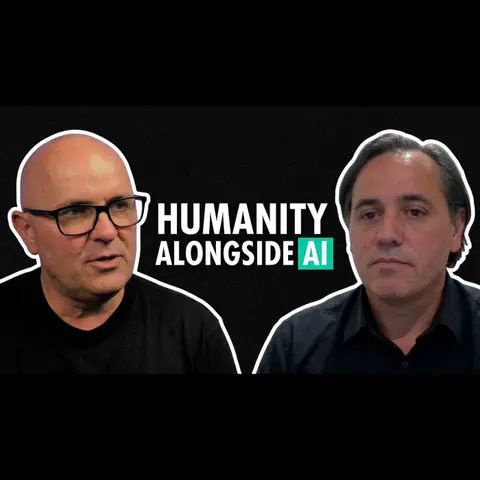
Te Reo Māori, translation, and using AI without losing human meaning Full Show Notes: https://www.theintelligenceagepodcast.com/844 Mark Smith speaks with Tane Karamaina, a senior translator working across Te Reo Māori and English, about how language, culture, and AI intersect in real-world translation work. The conversation explores why translation is never just word-for-word substitution, how AI can support but not replace human judgment, and the risk of homogenizing dialects as language t...

 Spotify
 Apple Podcasts
 YouTube
 RSS Feed
 Amazon Music
 PocketCasts
 iHeartRadio
 Podcast Addict
 Te Reo Māori, translation, and using AI without losing human meaning
Full Show Notes: https://www.theintelligenceagepodcast.com/844
Mark Smith speaks with Tane Karamaina, a senior translator working across Te Reo Māori and English, about how language, culture, and AI intersect in real-world translation work.
The conversation explores why translation is never just word-for-word substitution, how AI can support but not replace human judgment, and the risk of homogenizing dialects as language technology improves.
In this episode, Tane shares practical examples from translation work, including punctuation, implicit meaning, and culturally specific phrases like “O for awesome.”
The discussion also covers pronunciation, regional dialects, ancestral intelligence, and how AI in New Zealand could be used responsibly as an assistive tool rather than a substitute for human expertise.
Key topics
- Tane Karamaina introduces himself through a pepeha and explains the importance of naming whakapapa, place, and identity.
- He describes his work as a senior translator with more than 10 years of experience translating between English and Te Reo Māori.
- Translation is framed as cultural mediation, not word-for-word conversion.
- AI is presented as a useful tool for translators, but not a replacement for human understanding, interpretation, and responsibility.
- Tane explains how he uses AI for simple support tasks like punctuation and breaking down source text structure.
- The episode highlights how meaning is often implicit, culturally bound, and not directly transferable across languages.
- A deeper discussion compares Te Reo Māori and English through examples like “language” and “moana,” showing how words carry different worldviews.
- Mark and Tane discuss parallels between Te Reo Māori and Japanese, especially respect, vocal tone, and open syllable structure.
- Tane raises concerns about AI-driven language standardization flattening regional dialects and local variation.
- He argues the best protection against homogenization is for people to keep speaking and transmitting their ancestral dialects.
- The conversation closes on the idea that AI in New Zealand can be positive if it supports, not replaces, human beings and their communities.
If you want to get in touch with me, you can message me here on Linkedin.
Thanks for listening 🚀 - Mark Smith
00:00 - Introduction to the Software and Its Benefits
00:45 - The Importance of Food, Family, and Fun
05:20 - Exploring Tereo Maori and Cultural Identity
05:34 - AI in Translation: A Personal Journey
09:51 - The Role of Interpretation in Translation
12:46 - Cultural Nuances in Language Translation
16:17 - Respect and Communication Across Cultures
21:29 - The Nuances of Language and Communication
22:17 - AI's Role in Language Preservation
24:46 - Dialect and Cultural Identity
27:13 - Embracing Local Dialects
29:30 - The Impact of AI on Language Diversity
32:22 - Ancestral Intelligence vs. Artificial Intelligence
36:16 - Opportunities for AI in New Zealand
40:36 - Cultural Consulting and Translation Services
Introduction to the Software and Its Benefits
Mark SmithThe intelligence age is not coming. We're already living in it. I'm Mark Smith, and each week I speak with the people building, leading, and navigating a world being reshaped by artificial intelligence. We explore AI technology, the changing nature of work, and what it takes to build a meaningful career in the intelligence age. This is the intelligence age. Alrighty, welcome back to the show. I'm here with Tani. And we are going to explore Toreo Maori language and AI. And is there an effect on it? How people are using it? But before we get started, Tani, tell me about food, family, and fun. What do they mean to you in your part of the world?
The Importance of Food, Family, and Fun
Tane KaramainaThe three big Fs. Um so for me, foo, um, I love eating everything. Um there's not really I've never really come across any food that I won't eat. But if I had to pick one item of food that I love eating regardless, um I actually um, you know, when you go out for ice cream, I like to get the triple scoop. And at least two of the scoops will be chocolate-based. So I really love a giant ice cream. Um, so that's me food-wise. Um, in terms of in terms of family, um, I love my family. And one of the things that I love doing with my family is um I like to um I like to hang out with them. And sometimes we'll go down to um my great-grandfather's gravesite, and we uh and we actually spend the day there and we we uh we do the lawns and we you know we get to connect um together as a family and we we share stories and we catch up and um you know we get to uh remind ourselves that we are his living legacy and there's a lot of us. So um so so that's what what I enjoy um doing with family is you know really connecting, you know, different branches, um, learning genealogy that goes along with it, and finding out how you know all of all of us, you know, we're all different people, but you know, we've all got very similar values and and you know, we s sort of share like a world view. You know, you sort of think, oh, you know, I'm me, the individual, I'm unique. Um, but then uh I guess the blessing for me uh with family is that it reminds me that you know we're you know I'm not an an individual island, but I'm actually connected to others, and that's really cool. Um what was the what was the uh the other F? Um food family and fun. Fun, yes. Fun, oh gosh, um can't forget fun. Um so fun for me. Um I like to do lots of different things, you know. Um sometimes it's going to the gym and doing a you know a sports cardio inspired class. Um other times it could be just chilling at home, you know, watching, you know, streaming service. Um but last week I actually went to the movies and I find that quite a fun experience as well, you know, being, you know, you know, having to order the ticket and then you get collect the ticket and you know, oh gosh, I'm gonna get some popcorn or you know, chop top. And it's really fun like being able to go into a shared space uh with a group of other people, you know, um, and just enjoy something together, you know, enjoying the art of storytelling. So yeah, um, so yeah, so I I um I have a wide variety of things that I find fun, and I just think that um, you know, there is a lot in life to offer that is fun, and you know, um there are plenty of opportunities to be entertained.
Mark SmithLike it. I like it. Um, you gave me a very European answer um then. Imagine, imagine I wasn't European sitting here talking to you. Uh how would you introduce yourself?
Tane KaramainaSo um so as a speaker of Tanao Maori, I would use um a pepeha, and my pepeha um goes goes like this. Um kiwaho ko tauha kyuta ko waihu arawa ko uhine muri na awa ko tika patemuana kota ni ta waka, ko nati fanangate iwi, ko nati puku, tamteawa, nahapu, ko pawa fanangate fate tupu, uhwaho ne, kotane kalamaina, notahano kalamaina, emihatune, tenokuto, ten na kutu, tenatato katua.
Mark SmithLove it. I love it. 'Cause I want to make sure that everybody knows where you're from and uh and I think it's so important. I'm not Maori, but I have two Maori children and I have a Maori wife, and so I I I love to embrace the richness of Torio um where I can, even though you know I only have small um elements of it. Uh our discussion today is around AI, and I'm I'm keen to understand
Exploring Tereo Maori and Cultural Identity
Mark Smiththe last six months of your AI journey and how it uh applies to the work you do, and maybe included in that, you can talk about a bit a bit about the work you do, um, and then how are you using AI in your day-to-day?
AI in Translation: A Personal Journey
Tane KaramainaKilda, um, that's quite the question. Um, so I suppose to answer, you know, what have I been doing with AI? You know, what has been my AI journey, you know, the hiding that I've been on for the last six months. Um, I would describe it as um the process of, you know, the fuckang up ta ito. So it's, you know, humanizing the technology and you know, sort of putting myself in the driver's seat uh when it comes to using AI. I am a senior translator and I've been translating for more than 10 years now. And so um so for myself, uh when I translate from English into Tadel Maori or from Tadel Maori into English, those are my language pairs, you know, for me um it's all about crossing cultures, you know, communicating ideas from from one cultural group to another cultural group, and you know, not losing the essence or the meaning of what was, you know, in the source text. We call the source text uh the original language. And so, you know, how does that tie into my AI journey? Well, um, as I said, you know, I put myself in the driver's seat and I see AI as a tool for translators to use. And I see it as uh technology that can assist but can't replace because the the day-to-day role of the translator is not so much to translate words or phrases or sentences from language A into language B. It's actually to act as an um intermediary between cultures. And cultures are innately human, and there's no skirting around, there's no um, there's in my opinion, there's no way that you can actually replace the value of human interaction, of human-to-human interaction. And so for me, I I see AI as sort of like another tool in my toolkit as a translator, but it certainly can't replace the user, i.e. the translator. And so um, so for me, I've used it to um I've used it to help with, you know, very simple things like um like punctuation, for example, or sometimes I might use it for the you know, source language text. I might go, uh, um, can you break this down for me? Um, because you know, it's languages structure things differently. And so, um, and sometimes the meaning isn't explicit in what's being said in the source text. Sometimes there's a lot of implicit meaning. There's cultural understanding that um that speakers of the source language, in this case English, would know straight away, uh, but might not um exist in the target language. And, you know, um, and they're and you know, language is so bound into culture that um, you know, for example, uh and this is an example from you know New Zealand English, um, it's a very common phrase, you know, that is oh for awesome. Um, and that is so bound to New Zealand English that that reference wouldn't immediately be picked up by, say, um an Australian English speaker or an American English speaker. And it's the translator's day-to-day role um to communicate what was meant, you know, what's meant by O for awesome by looking for something that's equivalent in the target language. So um, so so you know, AI, you know, it's a tool, but it's it's not a replacement for um the greatest, you know, well, I say greatest, being so um uh human-centric, and that is the human genius, the human mind.
The Role of Interpretation in Translation
Mark SmithYeah, yeah. You know, word that kept coming to me as you were you were talking then was um interpreter, is that where translation in my mind is what's the word for word equivalent, that might not be the right and and that's where I think your day-to-day role is so important. It's not a word for word likeness because of the nuance of of language, but it's a what was your intent or what were you meaning by that word? And then do you find that a lot that it's not just simply uh this word is this word in this other language?
Tane KaramainaAbsolutely. Um, you know, um what you know, words and their meanings differ from language to language. So if I can um so for Tadeo Maori, for example, actually, even the name itself, Tadeo Maori, is not a uh strict one-to-one translation in the sense of um so we say the English language, and then in Tadeo, uh the Tadeo Maori equivalent, Tadeo Māori or Tadeo Ingari, the English language, um in Tadeo Maori, they all does mean language, but it also means voice.
Mark SmithYes.
Tane KaramainaSo the emphasis is on voice in in Tadeo Maori, whereas in English if you know your etymology in English, you know, language um is uh you know, is a um is a word for tongue. So there's already a difference in in perspective about how language is formulated and what's used to formulate language. And that's just one very simple phrase. I mean, sure they you know, we use them as translations of each other, but when you dig deeper, when you scratch beneath the the surface level, um there's some actually fundamentally different cultural um understandings of of what is meant by language or ill. Um so yeah, uh, you know, we talk about translation, and I like that you picked up that, you know, there's actually a lot of interpretation that goes on, and you know, that might uh ruffle some feathers uh with translators. Um but it it it that's it's true. That in terms to in terms of translating, there is a level of interpretation where um you have to find the best approximates in the target language to convey what's being said in the source language. So, you know, I think it's I think it is a fair comment um that translation involves interpretation and it's not just you know
Cultural Nuances in Language Translation
Tane Karamainait's not just sentence structure, it's not just word for word. It's also, you know, it's the meanings behind those words. And the mean and we refer to that um in linguistics as semantics.
Mark SmithYes.
Tane KaramainaSo um so each each word and in in in every language has its own um semantic meanings that have been assigned and are understood by speakers of the of that language. So if I can think of uh another example is the word for ocean, for example, muanla, um in Teneo Maori. So um so it's used as a translation for ocean. However, muanla means more than just ocean. Um it's used in other ways as well. For example, um there are two lakes that I can think of uh in in this country in New Zealand, in Al Teao, uh where the lakes aren't described as quote-unquote lakes, which would be a Rotol, but they're actually called Muana. Um so those two lakes I'm thinking of are Topur and Waikale. They're both called Muana. And they're they're both not only are they called mwana, but you know, they are they're treated in the same class as the open sea. And so uh which is a which is a um which is a a big difference from how an English speaker, for example, would view both of those bodies of water, because they're both they're both landlocked, um, and they're not um not as expansive of of what an English speaker might perceive the ocean to be. But from a t but from a Tereo Maori speaking perspective, they're labeled mwana one because of their um perceived size in comparison to a lake, but also their behavior. So if you go down to Topo to the quote unquote to the lake, uh it very much looks like an inland ocean. The way that the water behaves, you know, there are beaches. Um so you know, for my ancestors, uh to them, that isn't you know, that is a morn. And so there isn't a one-to-one between something as basic as lake um and ocean between Maori and English. So, you know, there are these there are things that um that as a translator you have to navigate. You have to know how to navigate um to understand, you know, what is being said and how people um define their relationship with the world around them.
Mark SmithYeah, yeah. I want to take a slight side quest, and that is um my uncle Jerry, uh uh who came from the north, um, he's been past about maybe 20 years now. But he used to live uh in the house right next to me growing up um in the Bombay Hills, and we had this Japanese headmaster come over
Respect and Communication Across Cultures
Mark Smithfrom Japan and live with us for maybe uh three months, maybe. And he came to New Zealand, um uh he was retired, and he wanted to it was kind of, and I was a teenager at the time, and it was to the thinking I'm have he came to apologize for what the Japanese did in the Second World War. But was what was very interesting, it is the most I have seen my Uncle Jerry talk in Maori to him, um, because there was a massive similarity between Japanese and as in that they seem to pick up each other more than him trying to pick up English from us. Does that seem right?
Tane KaramainaDoes there seem some parallel with Japanese language that there's there's nuance or I think you know, um, and this is something that uh other people um I've had conversations with have remarked to me about is the um when it comes to Tadel Maori and Japanese, just looking at it from I guess from a um from a structural level, um both um both languages um have a very strict um open syllable approach. So what you'll find in um Japanese and and Tadel is that every syllable ends in a vowel, usually. Um there's there are exceptions in in Japanese, um, but usually every um syllable uh will have a consonant and a vowel. Um and so and so on just I guess on that surface level, they're very um they're very similar. Um but then when you start scratching beneath the surface and when you start taking culture into account, um one thing that um that I've noticed um is that in both cultures there is a uh there is an emphasis um and a great importance placed upon respect. Um so and that translates into uh how you speak as well. So the way that you, you know, the the tones that you use to communicate, um facial expressions as well. And I'm not saying that English can't doesn't have this or can't do the same, but what I would suggest is that um part of what um probably led to um to uh to what you've um observed and what others have observed is that for um is that for two unrelated cultures um they both share um despite their differences, they sh have a shared sense of humanity, of that interpersonal relationship. So being able to um uh in those situations, being able to easily um when there's good will on on both sides, being able to cross more easily that that cultural divide uh where respect is appreciated and reciprocated, and it's not just through the words we say, but it's also through how we behave physically with our bodies and how we m modulate our voice as well to communicate the um sincere intentions um that we have. So um, you know, that and uh just to tack on to that uh is the um is that I've seen a lot of online discussions around, you know, uh the use of you know please and thank you in English is different from Tereo Maori. Um just building off from that respect cordial um discussion is that in Tereo Maori, um we do have words for please and thank you, but the more natural way to communicate um those um ideas is actually through the tone of your voice, because you can because in English, you know, it's almost obligatory, you know, you have to say please and thank you because that's polite. Um but the counter argument to that is that if your tone of voice doesn't match, the question is, is it actually polite? Like if I you know, if I was to say in English, uh, oh, pass me that book right now, thank you. You know, it's not it's definitely not polite because and we know it's not polite, um, because of you know the the tone, the the speed, and um and you know that, you know, that's what's you know, at least for Tadeo Ma you know, Tadeo Maori, that's what we're really good at communicating, you know, just through using our voice is the um uh is is respect.
The Nuances of Language and Communication
Tane KaramainaYou know, it's not something that you say explicitly, but it's something that you intimate through, you know, the way that you speak. It's how you say the word that really matters at the end of the day. Um and so you know, I would I would profer that um that because of that understanding that we have as speakers of Tedel Maori, that that um, you know, would also
Mark Smithhave contributed to the um to the ease in which uh speakers of of japanese and and tenel maori can interact with each other despite being completely different cultures from different ends of the world yeah
AI's Role in Language Preservation
Mark Smithinteresting in your use of ai um and you know let's take uh chat gpt let's take anthropic with their their clawed models um also consider google just released their map tool with terreo built in which is finally hearing place names pronounced correctly is amazing because it's kind of jarring when you hear it in the navigation you know my kids go sat sat nav everything and then you hear this weird pronunciation um of New Zealand place names and then copilot from Microsoft there seems to be quite a stark contrast if I have anthropic readme uh something you know um that's been produced in New Zealand and it's obviously using um uh trio in it in it might not be a full sentence but it's you know um it's using different words and it just misses the mark it's j it's jarring in that it's so wrong and and it affects the communication of it and I feel the same with open ai but I have noticed recently and this is not a plug for copilot but copilot seems to be much more um accurate if you like and then as I say this work that's recently been done with with Google and Google Maps in New Zealand how how much of a risk is there as Trio gets built more into these products and the pronunciation etc that there's a homogenization of uh the Rio in respect to I know that at across different Iwis, Hapus etc they have different like I gotta make Dan Walker uh in Microsoft and when he says very familiar Mari words that I know I'm like why is he pronouncing them like a white guy? Like he because he's from Taranaki right and you know he says fano rather sorry no he doesn't say it he says wano he says wano rather than fano and I didn't realize that in Taranaki they have quite a different their their subtleness dialect is quite different than what we see here in the north.
Tane KaramainaSo you know this is something that I've been concerned about for a while and you know it's something that um
Dialect and Cultural Identity
Tane Karamainayou know I I've I've I've been wrestling with and I you know I'm reminded of what one of my elders said to me about the start of the Kohangarel movement. So this is going back into the 19 early 1980s late 1970s I think the first one was in the late 1970s and um what they said was um they held this hui this this large gathering so people from all around the country came around and they you know the the the issue of dialect came up and in Teleo Maori one of the words for dialect is mita so we call dialect mita um there are other terms as well like Real Ayyui so tribal language um one uh one other word that I know of is Real Takiwa which means local language so um so they had this hui and you know the issue of dialect came up and what they resolved at that hui was um was that for their grandchildren and for future generations the most important thing is that they learn to speak tarel. So you know they go to the Kohangarel and now Kura Khoe Papa Fade Kura and they learn to speak Teril Māori but when it comes to dialectekinga they have to go back home and and that was sort of seen as as agreeable and so this was um you know 30 or 40 years ago so um so to tie this back to the issue of homogenization and you know I the way that I see it is is that yes this is a credible risk um that children um are not going to be exposed to their um ancestral dialect or that you know it's sort of a one quote unquote standardized version of the language receiving lots of support at the expense of of local variety and so uh so for myself what I would love to see more of and I don't know if you've watched this um TV show um it aired on uh it aired last year and it was called Tangathapai and it was based in Talanaki
Embracing Local Dialects
Tane Karamainaand the very region um uh um that that that that you used in your question and what I love about Tangatha Pai is that they use local language so um so all of the the actors uh when they used Tadell 30 I think they were aiming for about having 33% of the spoken dialogue in Tadell so huge amount of Tadell for a show that aired on mainstream TV like that was a real achievement it was a drama I think it went for about six episodes great watch and um but it was six episodes of just dialect and so it was you know um it was just beautiful to hear like to hear that local dialect being used and so I think the counter to homogenization is for people to embrace speaking their ancestral dialect so um so that means you know what those Koomatswa agreed to those elders agreed to 30 to 40 years ago is to go home because as a population um during the 1950s and 1960s there was a huge shift in the settlement patterns of of my people a lot of us went through uh what was called urbanization so and that was in search of jobs and employment and so they left their papakaing their um their home uh quote unquote villages um in search for better opportunities and so there's been that disconnect um in terms of language and and dialect and I think you know in the in the eyes and and in the hearts of those co-mart were 30 to 40 years ago because the language was in probably in a more precarious state than it is now for them it was like just any any terail was good telecams
The Impact of AI on Language Diversity
Tane Karamainaand so I think we're now in a position where if you know local language local dialect use it and if you don't um there are opportunities to learn um that being said when it comes to AI um what uh my personal preference is is that um is that the pronunciation reflects correct Ted pronunciation whether that's standardized or or local dialect like if I you know jumped onto Google Maps and the uh the the voice um started pronouncing things I guess in a uh in in another in another dialect maybe they're from Tuhoi that you know hearing uh todun for tow dunger is far better than hearing like oh taoranga yeah I'd rather toda I'd rather tow don't then than than than than taoranga so you know for me there are there are levels I guess it's like an onion there are there there are you know to use a cliche metaphor is that there are levels to this um and you know when I use like Google Maps now like I I love that if I'm driving around that um you know if I have to go down you know I'll just name some streets that that I know I'll that used to get wrong and really badly like if I go down you know it's not going to say like Mayoro Street or Manuroa or Tanapi you know it's gonna pronounce it um correctly as Mayor or uh Manulua and Tanapi and so you know to me that is a huge huge huge win but um yeah I think you know we as speakers of Tadeo Mahauri you know we need to um to do our bit in terms of you know speaking whatever dialect we know that um that we can speak and sure that it's that it's heard you know first amongst our relations um yeah and I think that's sort of the um the antidote to I guess homogenization because you know I I it's a problem I think that faces every language globally in some senses is that you've got a quote unquote standard form and if you don't um if you don't adhere to that standardized form you're sort of seen as being a bit backwards but you know nothing could be further from the truth. I mean language is a rich tool for culture and communication but um yeah I think that yeah when it comes to homogenization ultimately it comes back to human-to-human interaction we need to talk to each other and you know you know use inherited knowledge
Ancestral Intelligence vs. Artificial Intelligence
Tane Karamainaum I guess the other AI that I've seen floating in the indigenous space you know as opposed to artificial intelligence we need to tap into the other AI also called ancestral intelligence nice and use that as a counterway and to balance um the you know the information and what we're hearing and using.
Mark SmithWhat I love in what you said there is that what the Kamatua did back then was let's, you know, agree on the language the trio for the country but to know your unique dialect you need to go back to your people. And I think there's that whole um identification journey I notice my wife going through it as she goes back and traces back her roots and finds her people and finds her hapu and her Murai and things like that that that takes back to you have to be human connected to it and you have to go through that warm embrace of it which I I feel like it is a warm embrace when you go back um you know to those locations and be in those places.
Tane KaramainaAbsolutely like you know when I um you know when I spoke about you know family and um at the start of this you know that it really is that that warm embrace that that Affi you know that that that coming together um and you know we call that you know you know which you know has several meanings but in this context means um just being together as a family and so it's through those human to human um interactions that you build and you um and you solidify your um identity that it becomes it becomes less something as um theoretical that you know and it you know it goes from the mind and and it and it goes into you know your metaphorical heart yeah that it becomes your lived reality and so when you do that you know that it's a very empowering process and so um and so for for myself you know having that you know that those those regular meetups where we are going to my great grandfather's gravesite which is bringing us together you know it really helps you know solidify who I am through my Fokal Papa through my genealogy and I guess the way that this ties back into um AI is that um it sort of acts as a shield from you know losing yourself and your humanity because it's very easy it it's very easy to just you know let the algorithm decide let the uh let the uh let large language model do the decision making but um and and you know to to lose that you know innate humanity it's sort of like um we have to remind ourselves the tool was made for people not people made for the tool and so um you know it's our it's our responsibility as Kyaki as as guardians as custodians of human knowledge and expertise in whatever field we're in is to um interact in a way that's appropriate with the technology and doesn't um I suppose forfeit or to cede you know our own humanity and our own responsibility that we hold to our knowledges and to those around us. As we draw to a close tell me a bit about the opportunity for us to use AI um in New Zealand that can be additive, can be expansive can be positive um
Opportunities for AI in New Zealand
Tane Karamainayeah across the country across the two um I think there is a large opportunity for us to use um AI in a way that enhances what we do uh and whatever field that we're working in um noting of course that anything that AI outputs has to be checked by a human being you know um sometimes you know when I read about you know businesses or governments saying oh we can we can get AI to replace the people and we can save costs and it's sort of like you know where's your social responsibility to those people their families who depend on their income but also um how how you know how can you rush into embracing um such a technology that requires stewardship and responsibility so when it comes to the New Zealand context um I think AI has an opportunity to help um assist with um you know if you're a if you're a knowledge worker it can definitely assist in um in in going through information of course you have to double check because of AI hallucination and and whatnot but um you know it can definitely assist in in that way um and you know it can help improve quality it can definitely help improve quality of work um but by no means is it you know by no means do people want to talk to you know just thinking about you know the the public you know the public face of an organization you know people can tell straight away when they're talking to to uh quote unquote a machine or you know that because there's just um there are there are subtle cues you know uh that machines lack you know sometimes the voice might be a bit too monotone or the language might just be a little bit off um and so when it c I guess when it comes to like voice voice AI you know I I there's no you can't um there's there's no better value than or greater feeling than knowing that you've connected to another person and go oh there is a relationship they care whereas if you give that to technology the you're sort of saying oh well I don't you know I val I value your relationship um in the sense of it's going to be extractive on my end and that's as far as it's going to go. Whereas if you've got the person there um you know actually doing the talking it's you know it sort of fosters that sense of value and you know that's the I guess the public facing side of it in terms of again going back to us knowledge workers um you know it's about using the technology responsibly and not you know oh oh geez I've you know I'm really late on this translation um you know chat GPT take the wheel you know it really is you know um as the craftsman or the craftsperson I should say you know you should be crafting you know in my case the translation but hey you know if there's something in you know that you're not sure about and you know you don't have time to go through you know pages and pages of of of um Google listings or you know all there's information you can't find in the dictionary you know it can be quite helpful to unearth um extra information but you know at at the end of the day if you know if you say if you're gonna submit something and say this is yours well it has to be yours.
Mark SmithI like it. I like it. Tani tell us um as we close what what type of work you do for companies and organizations where where can they hire you? What do they usually hire you for? What what's that type of day-to-day role that you do?
Cultural Consulting and Translation Services
Mark SmithTane Karamaina
Um Absoltely so my day-to-day role is usually uh translation so that's the bulk of my freelance work that I do um but I'm also um I'm also able to provide um uh cultural tikanga advice as well and also um available as a consultant of sorts and things uh you know and things to do with the Al Maori you know um that those are also things that um I I offer as um as services but largely I'm contacted in terms of translation and I think it's because one how long I've been a translator for and the types of translations I've done so you know I've done translations for TV um I've done translations for um local government central government um and I've really ran the full gamut of types of translations you can do all the different genres um but yeah anything I suppose to do with Darel Menga tikkan and mahogi you know that's my playground so um you know I'm more than happy to um to talk to people um about that and and what they can you know what they have as their hopes and aspirations for their organizations. I you know I I love to you know help people you know get on that um get on the walker you know get on get on the boat and and and start their their hiding of their their journey into Tadel Mori and it's you know I I love helping people you know make their Tadel Maori aspirations their dreams an actual reality.
Mark SmithLove it. Tani thank you so much for coming on the show.
Tane KaramainaThank you so much Mark it's been a pleasure talking to you um met then no hoki emoji kitehunga ematakimayana no hoki um ketawanit ten la kultu tenakutu tenatekatoa
Mark SmithYou've been listening to the intelligence age on Mark Smith the Intelligence Age is already here the question is what we choose to do with it